Explainer · People-Led Enterprise AI
People-led AI combines employee leadership with shared direction
People closest to the work lead improvements, supported by shared priorities, connected tools and governance.
People-Led Enterprise AI
74% of white-collar employees now use AI regularly (BCG, 2026).
Yet 56% of CEOs say AI has brought no significant financial benefit to their companies (PwC, 2026).
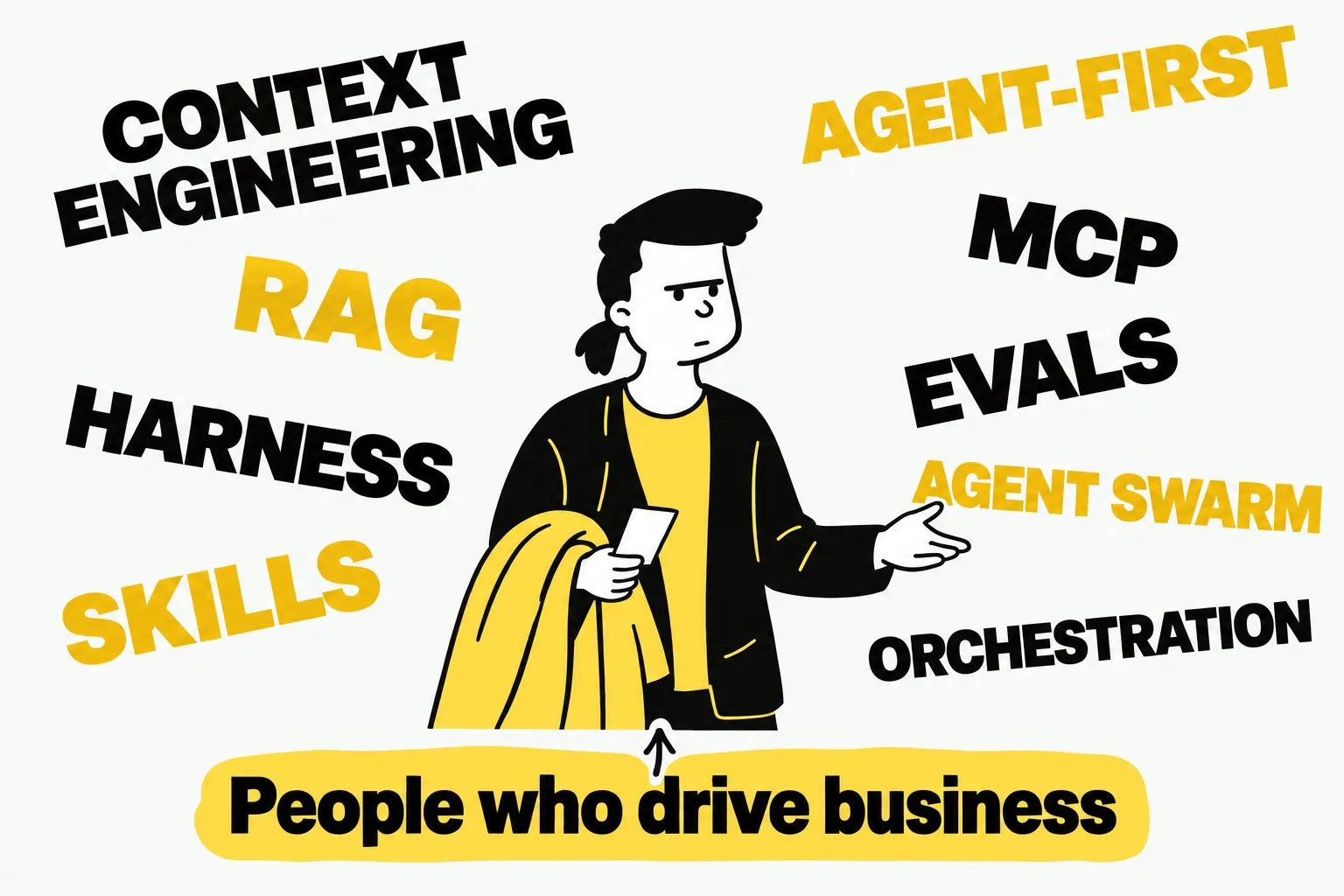
Employees get basic AI tools, but lack the connected systems, training and support to turn ideas into value.
Teams experiment independently, without a shared strategy or AI ecosystem → Solutions are hard to govern, reuse and scale.
Technology-led initiatives and centralized backlogs can miss real business priorities and useful everyday improvements.
When employees don’t lead change, AI can feel like a threat to jobs, fueling fear and resistance.
People-Led Enterprise AI addresses this by combining people’s expertise, capabilities and leadership with a shared, governed AI ecosystem.
Its central principle is simple:
Every employee can build, lead change and create value with governed enterprise AI.
This hub brings together knowledge, experts and a community to explore and develop that approach in practice.
Definition
Tech
People
Engineering-Led AI Implementation
Tech
People
AI-Native Culture & Bottom-Up Innovation
Enterprise AI Ecosystem
People-Led Enterprise AI is a business operating model where business teams own outcomes, employees lead improvements, and specialist teams build complex solutions within a shared, governed AI ecosystem.
Why people-led
Ideas compete for limited engineering capacity. Prioritization and backlogs can delay delivery or leave small improvements unbuilt.
AI speeds up specialist delivery, but team capacity and backlog priorities still limit which ideas get built.
With employee self-serve AI, staff use an approved platform with company data and integrations to improve their work. Suitable ideas can move from idea to value in hours, at low cost.
Many everyday improvements never reach a traditional engineering or specialist AI backlog, even when they do not need complex engineering. With self-serve AI, employees can improve and automate their own work, bringing those ideas into the value chain.
Three phases to a moat
First people save time. Then the company directs those gains toward revenue and cost. As teams share knowledge, reuse solutions and redesign processes, individual improvements can become capabilities competitors find hard to copy.
Phase 1Individual AIPersonal productivity | Phase 2Enterprise AICompany productivity | Phase 3MoatAn advantage others find hard to copy | |
|---|---|---|---|
| Core change | AI helps with individual tasks Useful, but fragmented | Work aligns around business goals AI starts moving company metrics | A new business architecture Processes rebuilt around AI |
| Business users | Do today’s work faster and better Less time per task, higher quality | Create new things, ship improvements More revenue, lower cost | Do what competitors can’t More value, better price |
| Technical teams | Less toil Copilots, automated tests and coding agents | Improve how you build AI across the development cycle | Redesign how work runs Processes, integrations and systems |
| Agents | Assist people On request | Run repeatable workflows At scale, under control | Act on signals Notice, decide, execute, improve |
| KPI | Hours saved, cost saved and active AI users Personal productivity | Revenue, time to market and cost efficiency Company performance | Market position, margin and growth Competitive advantage |
Personal productivity
AI helps with individual tasks
Useful, but fragmentedDo today’s work faster and better
Less time per task, higher qualityLess toil
Copilots, automated tests and coding agentsAssist people
On requestHours saved, cost saved and active AI users
Personal productivityCompany productivity
Work aligns around business goals
AI starts moving company metricsCreate new things, ship improvements
More revenue, lower costImprove how you build
AI across the development cycleRun repeatable workflows
At scale, under controlRevenue, time to market and cost efficiency
Company performanceAn advantage others find hard to copy
A new business architecture
Processes rebuilt around AIDo what competitors can’t
More value, better priceRedesign how work runs
Processes, integrations and systemsAct on signals
Notice, decide, execute, improveMarket position, margin and growth
Competitive advantageWhat you’ll find
Practical resources and a community to help you put People-Led Enterprise AI into practice.
For business leaders, People teams, team leaders, AI engineers and transformation leaders.
Explainers and practical guides across the six topics.
People closest to the work lead improvements, supported by shared priorities, connected tools and governance.
If changes arrive faster than your reviewers clear them, the queue grows no matter how fast the agent wrote them. Changing who reviews what shortens it.
Delegation, Description, Discernment and Diligence, one at a time, on a single database migration that goes from "should an agent touch this?" to a signed change.
Practitioners can contribute articles, case studies and implementation guides, share experience, ask questions and find answers.